What is a ship propelling? Operation, types and materials
A ship propelling is the central element of the propulsion system in charge of transforming the mechanical energy generated by the engine into hydrodynamic thrust. Although visually it may seem like a simple component, its design responds to advanced criteria of naval engineering, fluid dynamics and material resistance, since key aspects such as propulsive efficiency, fuel consumption, acceleration capacity, maximum speed, vibrational behavior of the boat depend on it. transmission system useful.understand what a Boat propeller, how it works and what variables influence its performance is essential to optimize any boat, from pleasure boats to commercial and industrial ships that operate in high demand conditions.
What is the propelling of a ship?
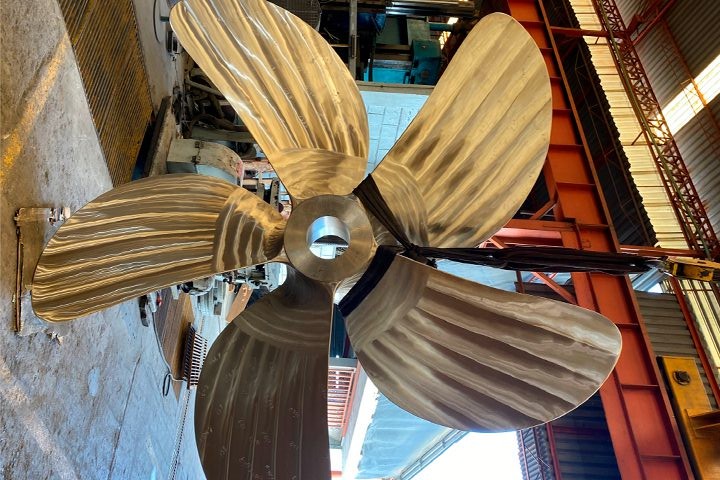
When we analyze what the propelling of a ship is from a technical perspective, we refer to a rotary device formed by a core attached to the propelling shaft and a set of helical blades with a carefully designed hydrodynamic profile. Each blade acts as a submerged support profile that, when rotating, generates a pressure difference between the pressure face (Pressure Side) and the suction face (suction side). This difference produces a force with axial component that generates the necessary thrust to move the boat through the water.
From the physical point of view, the propel works on the principle of conservation of the linear moment: by accelerating a mass of water towards the stern, a reaction force is generated in the opposite direction that drives the hull towards the bow. However, this process takes place in a complex hydrodynamic environment, where the yield of the propel is conditioned by factors such as the trail generated by the hull, turbulence, pressure variations and interaction with other elements of the propulsive system, such as rudders or Nozzles.
For this reason, the design of a propelle should not only focus on generating the required thrust, but also on achieving optimal hydrodynamic integration with the rest of the boat to maximize efficiency, reduce vibrations and guarantee reliable operation under real operating conditions.
Hydrodynamic fundamentals of functioning
To fully understand what a ship’s propelling is, it is necessary to analyze its hydrodynamic behavior. The propulsive efficiency depends on the interaction between the geometry of the blades, the relationship between the diameter of the propeller and the speed of rotation, as well as the capacity to minimize losses caused by cavitation and the rotational wake. The proper combination of these factors makes it possible to take full advantage of the engine power and improve the overall performance of the propulsion system.
The push generated by the propellant is determined, among other factors, by the water density, the Effective blade area and the speed increase that they print to the flow. The more efficient that controlled acceleration of water, the lower the energy wasted in the form of turbulence and the greater the propulsive performance.
Therefore, the design of a propellant seeks to maximize useful thrust, reduce energy losses, minimize induced vibrations and ensure structural stability of the blades under the different loading conditions to which it will be subjected during its useful life.
Key technical parameters in the design of a boat propelling
The performance of a propel It is conditioned by multiple geometric and operational variables.
Diameter
A larger diameter of the propelle allows to generate more thrust with a lower turning speed, which contributes to reduce the risk of cavitation and improve propulsive efficiency, especially in displacement boats. However, the increase in diameter also usually translates into a higher manufacturing cost and is conditioned by the space limitations available on the boat and by its correct structural integration with the propulsive system and the hull.
Step (pitch)
The passage of the propelle defines the theoretical progress made by the boat for each revolution of the axis. Its correct selection is essential for the engine to work within its optimal range of revolutions, so the analysis must take into account the manufacturer’s recommendations and leave a safety margin that compensates for the progressive deterioration of the performance caused by the dirt accumulated in the hull and the propellers, as well as by The natural wear of the engine throughout its useful life.
This aspect is especially important, since an inadequate step can cause Mechanical overload, , Over-revolution of the engine, a Increased fuel consumption and one Propulsive performance loss, reducing both the efficiency and reliability of the propulsion system
Number of blades
The number of blades of a propeller is determined by several factors, which must be studied to define which propeller is best suited to each boat. A smaller number of blades allow to achieve better theoretical performance, but in practice this is not always the case. A greater number of blades generally provides greater comfort on board. The increase in the number of blades distributes the load, reducing individual efforts and improving the smoothness of operation.
Cavitation
The marine cavitation is one of the main operational risks. It occurs when the local pressure falls below the vapor pressure of the water, generating microbubbles that violently implode against the surface of the blades.
The main consequences of cavitation are as follows:
- Surface erosion
- Loss of material
- Performance reduction
- Noise increase
Its prevention depends on a correct design and analysis on the operating conditions.
Types of boat propelling according to application
Fixed pitch propellers (FPP)
Fixed pitch propelles, also known as monoblock propellers, are the most used due to their simplicity, robustness and high reliability. In this type of propelling, the blade passage remains constant and is designed to offer maximum performance within a specific range of operation, which allows to reduce mechanical complexity and maintenance needs. Due to these characteristics, they are a common solution in fishing boats, recreational boats, pushers and numerous standard commercial applications.
Variable step propelles (CPP)
The variable pitch propelles are formed by an independent core that incorporates an internal hydraulic system on which the blades are mounted. This mechanism allows you to modify the angle of attack of the blades during operation, adapting the passage to the different navigation conditions and considerably expanding the operating range of the propeller.
Thanks to this adjustment capacity, they offer continuous optimization of performance, better adaptation to load variations and a reduction of fuel consumption in dynamic operating profiles. For this reason, they are a widely used solution in work ships, offshore boats, ferries and other ships that require maintaining high efficiency under changing operating conditions.
Materials in the manufacture of propellers
The selection of a propelled material directly influences its performance and useful life. In addition to determining its structural strength, it conditions its behavior against fatigue, its durability in marine or fluvial environments and its ability to maintain the geometry of the blades when they are subjected to high hydrodynamic loads. Likewise, the chosen material has an impact on the manufacturing cost, maintenance needs and the global budget associated with the propeller life cycle.
Bronze alloys
AndThese alloys are widely used in environments commercial and industrial for your High corrosion resistance and good structural behavior. Nickel-aluminium-bronze especially stands out for its durability, Dimensional stability and good resistance to erosion/cavitation in continuous operation. Within the bronze alloys there are different qualities in function Desired performance: Nickel-aluminum bronze (CU3), manganese bronze (Cu1) or aluminum-manganese bronze (CU4).
They are used in work boats where they are prioritized Reliability and useful life, with good balance between performance and maintenance.
Stainless steel
Stainless steel propelles (CF3) offer superior performance in high demand applications thanks to their high mechanical strength and structural stability. Its high modulus of elasticity, the greater resistance to impacts and its ability to maintain the original geometry of the blades allow to manufacture finer and more precise profiles from the hydrodynamic point of view.
This greater rigidity reduces the deformation of the blades when they work under load, improving acceleration, increasing the maximum achievable speed and maintaining high propulsive efficiency throughout the life of the propeller. For these reasons, stainless steel is one of the most recommended options for professional boats, high performance or subject to particularly demanding service conditions, where it is essential to combine robustness, durability and hydrodynamic efficiency
Aluminum
Aluminum is a light and economic option, common in recreational boats and outboard motors. Its low weight reduces inertia and facilitates an agile response, in addition to cheapening manufacture and replacement.
As a limitation, it has less mechanical resistance and other materials: before impacts or high loads it can deform more easily, which affects the hydrodynamic profile, generates vibrations and reduces performance. In the marine environment, it is advisable to control the galvanic corrosion with adequate protection (anodes).
Selection and optimization of a boat propeller
The choice of propelling must be based on a comprehensive analysis of the propulsive system and the operating conditions of the boat. To do this, it is necessary to evaluate the power and torque curve of the engine, the reduction ratio, the actual displacement of the ship, the type of hull, the usual operating regime and the navigation environment. Only by considering the set of these factors is it possible to select a propellant capable of offering the best balance between performance, efficiency and reliability.
Proper sizing allows the engine to be kept within its optimum rpm range, reduce specific fuel consumption, minimize vibrations, and extend the life of both the propel and the rest of the propulsion system. In professional applications, this process is complemented by CFD simulations and techniques of Advanced hydrodynamic modeling, which allow to predict the behavior of the propeller and optimize its design before manufacture, reducing development costs and improving performance in service.
Engineering, precision and optimization in propeller design
The selection of a Boat propeller It should not be addressed only from standard parameters or generic catalogs. In professional applications, each propulsive configuration requires a specific analysis that takes into account the actual interaction between the hull, axle line, engine and operating conditions.
Performance optimization requires an advanced engineering-based approach. In this context, the use of CFD simulations (Computational Fluid Dynamics) and hydrodynamic modeling allows you to analyze the behavior of the flow around the propeller, anticipate phenomena such as cavitation and adjust parameters design before the manufacturing phase.
On RICE, The development and selection of propulsion solutions are supported by rigorous technical criteria, experience in demanding environments and advanced simulation tools. This approach enables efficiency to maximize, reduce energy losses, and ensure structural reliability in applications where performance does not support approaches.
The combination of technical knowledge, hydrodynamic analysis and precision in the Manufacture of Propels It is key to ensuring that each a responsive to the operational requirements of the project.
Frequently Asked Questions about Boat Propel
What is the propelling of a ship and what is its technical function?
Propel is a rotary hydrodynamic device that transforms the mechanical energy of the motor into kinetic energy of the fluid, generating thrust by accelerating the water towards the stern.
Why choose stainless steel propelles?
Because they offer greater structural rigidity, better maintenance of the geometry under load and greater durability in demanding applications, which translates into more stable performance and less degradation in the long term.
How does the passage affect fuel consumption?
A correctly sized step allows the motor to operate within its optimal range of revolutions, reducing specific consumption and avoiding mechanical overloads.
What signs indicate problems in a boat propelling?
Abnormal vibrations, loss of speed, increased consumption, visible erosion or difficulty in reaching the nominal engine speed can indicate damage or improper sizing.